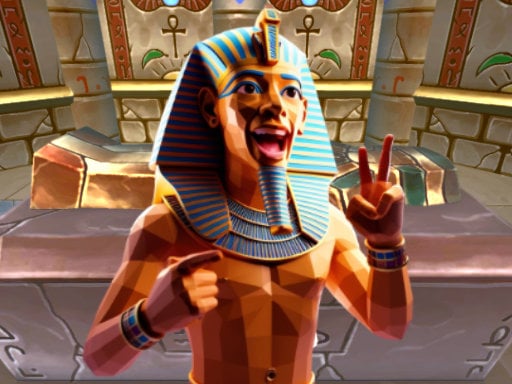
ABOUT THE GAME
Escape Ancient Egypt game overview
Stone chambers, royal imagery, and locked passages form a connected escape route through an Egyptian temple. Each room hides an interaction or logic problem that must be understood before its exit will open; the setting is not merely decoration, because objects in the chamber provide the clues and mechanisms needed to continue. The journey advances door by door until the entire ruin has been cleared in one sitting. Progress is not saved, so leaving midway means beginning the temple again. There is no rival or combat system: the pressure comes from observing each scene accurately, interpreting its puzzle, and avoiding a dead end in reasoning.
WHAT TO EXPECT
Before you start
Expect a sequence of self-contained chambers where careful inspection leads to an object, switch, code, or arrangement that releases the next doorway deeper inside the temple.
GETTING STARTED
How to play Escape Ancient Egypt
Study the current room before selecting anything. Check decorative panels, movable objects, and repeated symbols for relationships, then try an interaction that follows the evidence visible in that chamber.
When a mechanism opens the exit, move into the following room and repeat the search. Because the run must be completed in one session, keep solved relationships in mind rather than restarting casually.
CONTROLS
Controls and device setup
Click objects with the mouse, or touch interactive parts of the temple scene.
PLAY SMARTER
Tips for Escape Ancient Egypt
- Compare repeated symbols across a room before treating any mark as decoration.
- Finish examining the current chamber before moving through its newly opened door.
- Reserve enough uninterrupted time because the temple does not save partial progress.


