ABOUT THE GAME
Klondike Solitaire Pro game overview
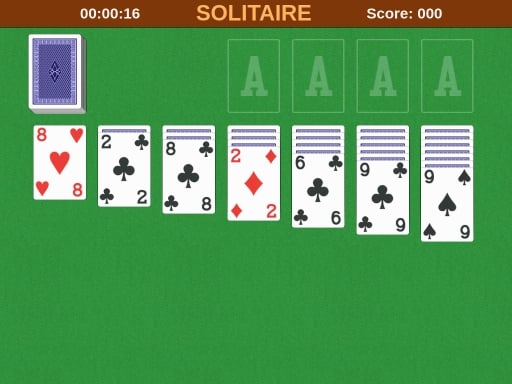
From the opening decision, Klondike Solitaire Pro presents the familiar tableau-and-foundation structure with modern themes, hints, and undo. Every visible move should either reveal information or prepare a foundation card. Each turn supports the effort to move every card into four suit foundations ordered from ace through king. Build descending tableau sequences while alternating colors, uncover face-down cards, and send each suit upward from ace to king. The deal is won only when all four foundations are complete. After the opening success, tableau moves expose hidden cards and build each foundation toward completion. The modern Klondike card foundation puzzle uses this boundary: A deal remains unfinished when no sequence of legal moves can place every card.
WHAT TO EXPECT
Before you start
This is a thoughtful single-player card puzzle without an opponent. Optional hints and undo make it possible to review a choice without changing Klondike's central rules.
GETTING STARTED
How to play Klondike Solitaire Pro
Expose face-down tableau cards whenever a legal move permits it, but avoid moving cards to foundations so early that they block a useful tableau sequence.
Build foundations in roughly balanced order and use empty columns carefully. If the position stalls, consult a hint or undo the move that closed an option.
CONTROLS
Controls and device setup
Use the mouse or touchscreen to select and move legal cards or stacks; the interface also provides undo and hint controls.
PLAY SMARTER
Tips for Klondike Solitaire Pro
- Prioritize revealing face-down cards because hidden information limits every later choice.
- Keep foundation ranks reasonably even so low cards remain available for tableau moves.
- Use an empty tableau column for a king only when it improves access.