ABOUT THE GAME
Merge Dice 3D game overview
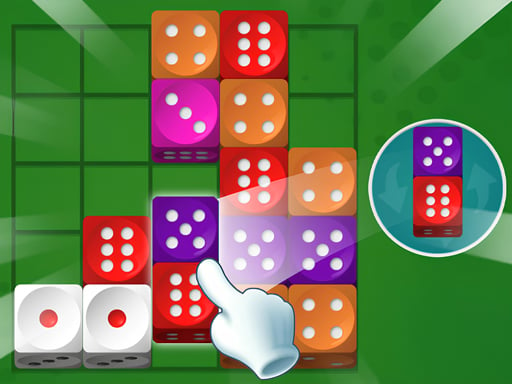
At the opening prompt, Merge Dice 3D turns a colorful grid into a planning problem. Matching values combine into a higher die, but each placement consumes space before it creates an upgrade. The round's purpose is to combine matching dice to create higher values without exhausting grid space. Drag a die, complete a merge, and inspect the new number alongside the remaining gaps. Poor distribution can close the board even when individual matches look useful. Across the later activity, every successful merge produces a larger number and changes later placement options. A key restriction on the space-limited numbered-dice merge puzzle is that the puzzle ends when limited space leaves no usable merge or placement.
WHAT TO EXPECT
Before you start
There is no reflex requirement in this loop. The difficulty comes from predicting where upgraded dice will sit and keeping future pairs reachable. During the continuing loop, every successful merge produces a larger number and changes later placement options.
GETTING STARTED
How to play Merge Dice 3D
Locate existing copies of the offered value before dragging. Place the die where the resulting higher number can connect with another matching piece later.
Preserve at least one flexible area of the grid instead of filling every gap. Reconsider a short-term merge if it isolates a valuable high die. Let the current decision strengthen the ongoing progression: Every successful merge produces a larger number and changes later placement options.
CONTROLS
Controls and device setup
Click and drag a die with the mouse, or touch and drag it on mobile, to place it beside a matching value.
PLAY SMARTER
Tips for Merge Dice 3D
- Build related values near one another so future upgrades require less space.
- Protect open cells that can accept several different dice shapes or values.
- Plan the upgraded die's position before completing the lower-value merge.