ABOUT THE GAME
World of Alice Animal Habitat game overview
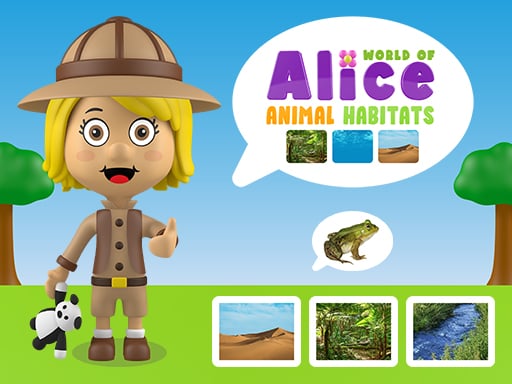
Choose the habitat where the represented animal naturally lives. The surrounding situation is clear: an animal appears with several environments that could serve as its home. Climate, water, vegetation, and shelter provide the evidence for the correct habitat. For World of Alice Animal Habitat, no defeat state interrupts placing animals in their correct habitats; an incorrect habitat leaves that animal prompt unresolved. Comparing the available environments and choosing its natural home is the response to identifying the animal and noting its physical adaptations, and a correct habitat match advances the classification activity. Each correct classification introduces another animal and set of possible environments.
WHAT TO EXPECT
Before you start
Comparing the available environments and choosing its natural home is where the result appears, but identifying the animal and noting its physical adaptations determines the approach. A correct habitat match advances the classification activity, and climate, water, vegetation, and shelter provide the evidence for the correct habitat.
GETTING STARTED
How to play World of Alice Animal Habitat
Identifying the animal and noting its physical adaptations provides the initial information. Act on the fact that climate, water, vegetation, and shelter provide the evidence for the correct habitat. Choose the habitat where the represented animal naturally lives.
Comparing the available environments and choosing its natural home turns the opening choice into progress. Each correct classification introduces another animal and set of possible environments.
CONTROLS
Controls and device setup
Select the correct environment with one mouse click or one touchscreen tap on its habitat picture.
PLAY SMARTER
Tips for World of Alice Animal Habitat
- Look for water, ice, trees, or open grass before focusing on colors.
- Use the animal's feet, coat, or body shape as habitat clues.
- Eliminate clearly unsuitable climates before deciding between two plausible environments.