





ABOUT THE GAME
World of Alice Occupations game overview
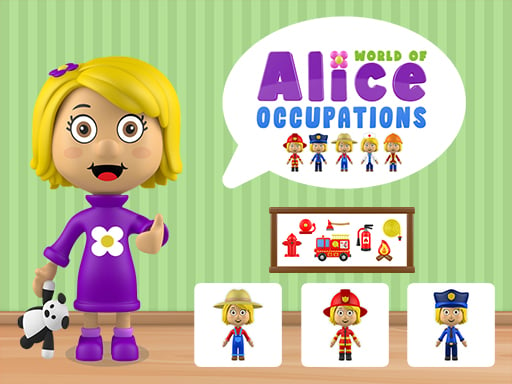
World of Alice Occupations takes place in a child-friendly lesson showing professional tools and several possible workers. You identify the occupation associated with the displayed equipment and choose that person. Success depends on connecting each tool with how it is used rather than memorizing picture positions. Correct associations lead to more professions and new sets of workplace objects. An incorrect profession must be reconsidered before the lesson proceeds. In World of Alice Occupations, every result informs the next move.
WHAT TO EXPECT
Before you start
World of Alice Occupations emphasizes occupation and tool recognition. Key decisions involve connecting each tool with how it is used rather than memorizing picture positions. As difficulty grows, occupation and tool recognition remains the focus.
GETTING STARTED
How to play World of Alice Occupations
First, name each tool before reviewing the possible occupations. Next, identify the occupation associated with the displayed equipment and choose that person. Pause after each result before continuing.
Think about where the equipment would normally be used. Correct associations lead to more professions and new sets of workplace objects. Main risk: an incorrect profession must be reconsidered before the lesson proceeds.
CONTROLS
Controls and device setup
Click or tap the worker picture that matches the tools presented on screen.
PLAY SMARTER
Tips for World of Alice Occupations
- Eliminate professions that could not reasonably need the displayed object. Keep one useful casual follow-up available.
- Use uniforms as supporting clues after considering the tools themselves. During occupation and tool recognition, read the consequence before choosing again.
- Review the correct job after feedback to strengthen the association. This protects late progress during occupation and tool recognition.