





ABOUT THE GAME
World of Alice Emotions game overview
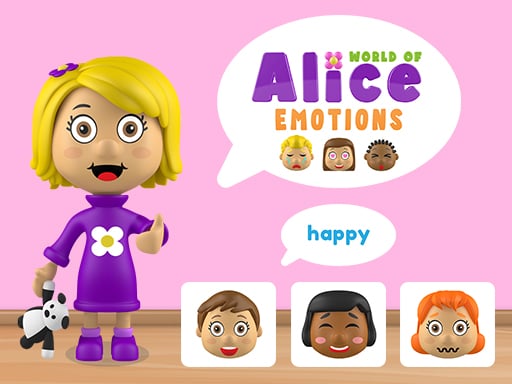
World of Alice Emotions takes place in an illustrated educational board presenting faces and named feelings. You read the requested emotion and select the expression that communicates it. Success depends on comparing eyes, mouth, and posture rather than choosing by color or position. Correct identifications introduce additional feelings and visual expressions. An incorrect face must be reconsidered before the learning activity advances. In World of Alice Emotions, every result informs the next move. The emotion recognition learning activity format keeps attention on this goal: choose the face that matches the emotion named in the prompt
WHAT TO EXPECT
Before you start
World of Alice Emotions emphasizes emotion recognition learning activity. Key decisions involve comparing eyes, mouth, and posture rather than choosing by color or position. As difficulty grows, emotion recognition learning activity remains the focus.
GETTING STARTED
How to play World of Alice Emotions
First, read the emotion word before examining the available faces. Next, read the requested emotion and select the expression that communicates it. Pause after each result before continuing.
Compare the mouth and eyebrows when two expressions look related. Correct identifications introduce additional feelings and visual expressions. Main risk: an incorrect face must be reconsidered before the learning activity advances.
CONTROLS
Controls and device setup
Click or tap the illustrated expression that best matches the emotion requested on screen.
PLAY SMARTER
Tips for World of Alice Emotions
- Describe the visual clue that supports a choice before selecting it. Keep one useful casual follow-up available.
- Use elimination when one face clearly communicates an opposite feeling. During emotion recognition learning activity, read the consequence before choosing again.
- Review the correct expression after feedback to strengthen future recognition. This protects late progress during emotion recognition learning activity.